When you create an advanced directive the conversations that lead to it can be just as important as what is in the document. Take time to talk!
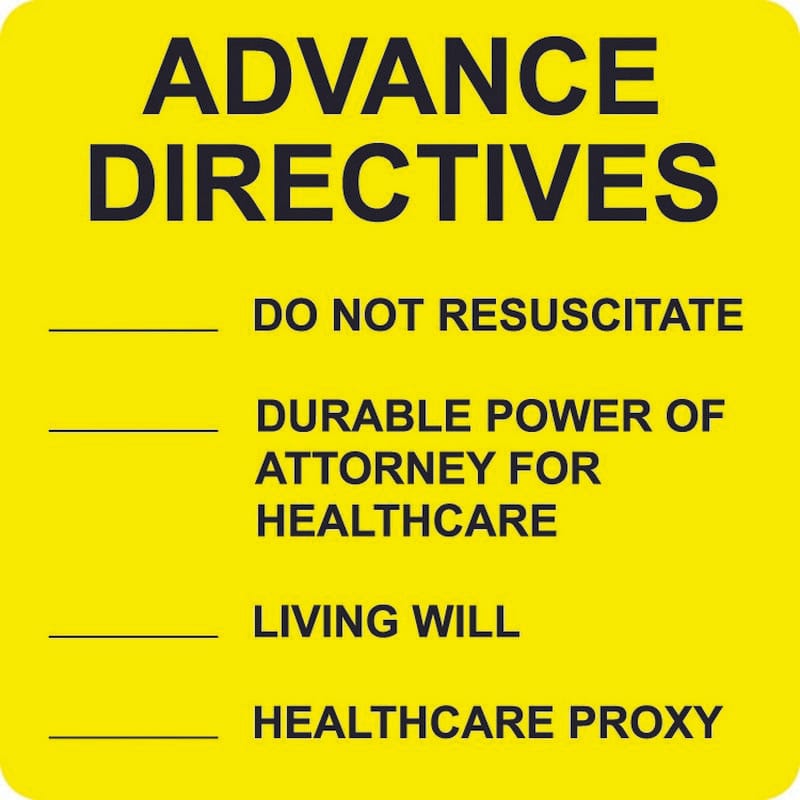
I FILLED OUT an out-of-hospital “Do Not Resuscitate” for Connie this morning as a part of bringing in hospice to provide her with extra care.
I had not done one earlier because even as someone goes down a path with no off-ramps, there could be times when resuscitation makes sense. Then there comes that day when you just need to accept those times are past; that if we have not reached the end, we can see it from here.
We both have advanced directives and for all intents and purposes I activated Connie’s when we called in hospice a couple of weeks ago. When hospice comes in curative care stops and comfort care begins.
Advanced directives are designed to provide both guidance and comfort for those around someone who is nearing death, not to mention fulfilling the wishes of the one dying. In our case, it provided both but not entirely.
When you make a decision that basically accepts death as opposed to hope for life, it is hard, no matter how prepared for it you think you are.
I’ve realized this lately in conversations with others, particularly where maybe not all family members are accepting of the finality.
Connie obviously has an extended family and most of them have not been on the ground with her these past three years. I have, my son has and even though she lives away my daughter has. When we made the decision we were all on board. Some of Connie’s other family may not be, but , it is none of their business. Respect and courtesy says you inform them, but when it comes down the decision time, it’s up to the person legally designated to make that decision. Talk to whomever you want, but in the end, it’s you.
That’s why it’s important to really talk this thing out when everyone is healthy and sound of mind. I can remember Connie and I spending evenings out on our patio with Buddha at our house in Huntsville, Texas, talking about how we wanted to end life.
THE LAST 15 years or so of Connie’s law career was in elder law. She did estates, set up advanced directors, powers of attorney. And, being Connie, of course she spent unbilled time with families, holding hands, guiding them. She brought all of that out onto our patio.

During those conversations we each were very clear with the other about what we wanted. For instance, at one point she was recounting a patient who had to have a feeding tube installed even though she felt that person had no hope of recovery. She told me flat out that “if you stick one of those down my throat, I will come back and haunt you.”
Now that she has frontal temporal dementia which can impact swallowing at some point, just remembering those conversations gives me comfort if I make that particular decision.
When I think back on those conversation now I realize that we were being as honest with each other as possible. I accept we created those documents for a reason. Sitting on the patio, sipping wine, of course we weren’t thinking about the time we’d have to make decisions about life or death. We both thought, I think, we’d live long lives then fall over dead without a lot of complications.
Didn’t turn out that way, at least for Connie. So, I made the decision. I talked to the kids, but in the end it was my decision. There may be others who will second guess me no matter what I say but those that matter won’t. Particularly Connie. She made the decision for me, years ago on a patio on a warm night with chilled win and Buddha.
If you haven’t had those conversations yet, might want to sit down and chat soon…..
Rich Heiland, has been a reporter, editor, publisher/general manager at daily papers in Texas, Pennsylvania, Illinois, Ohio and New Hampshire. He was part of a Pulitzer Prize-winning team at the Xenia Daily (OH) Daily Gazette, a National Newspaper Association Columnist of the Year. Since 1995 he has operated an international consulting, public speaking and training business specializing in customer service, general management, leadership and staff development with major corporations, organizations, and government. He also writes the blog stuffonmymind.blog. Semi-retired, he and his wife live in West Chester, PA. He can be reached at [email protected].
Another great article Rich.
Continued prayers