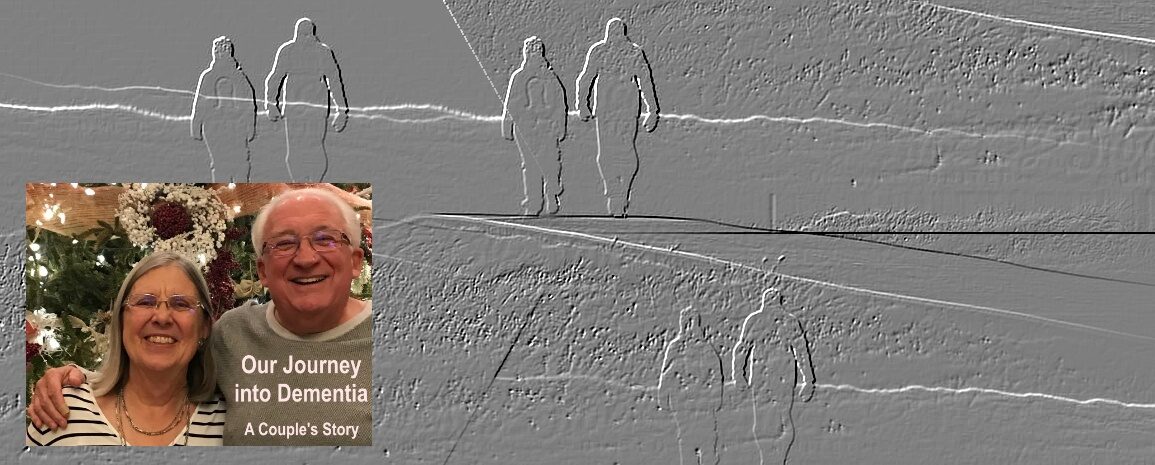
For caregivers the waiting for what you know is coming, while not wanting it to come, can drain the life from you
WAITING FOR someone to die is so damned exhausting.
How’s that for a sentence that sounds awful on more than one level but true beyond dispute. If you have been a care giver for someone who is terminal, I am willing to wager a tidy sum that when fatigue had you the deepest in its grip, you might have had that thought.
For those who have not been a caregiver to a terminal patient, if you ever find yourself in that position there will come a day when you start wondering why you are so tired, why you seem to be sleep-walking through days from which any sense of routine has left the house.
That sentence sounds, at its core, like self-pity, a woe-is-me complaint. And, of course, it is. That doesn’t change the truth of it.
There is no hope with dementia and ultimately the physical decline.
I wrote once that the worst thing about dementia, compared to other terminal illnesses, is that her are two deaths. The first is the death of the mind, the essence of the person. The second is the death of the body. To me the real death is the first one. The second one – the physical – is a formality.
Right now, with Connie the mental and physical declines seem united. Her Frontal Temporal Dementia has robbed her of speech. Communication is words coming out of her mind and my brain trying to make sense of it. If sense can be made of it. Sometimes I think she has a moment of clarity and wants to communicate. Other times I think she is speaking from a world far away from the one I know.
She no longer can feed herself. The FTD has taken away the coordination needed to effectively handle utensils to for the most part someone has to feed her. Sometimes it is me, most often the staff.
She no longer can walk. She is in a hospital bed and a wheelchair and there have been falls. She is in hospice so there will not be curative care, only comfort care.
For the most part, I wait. I don’t leave town, unless it’s a quick trip. I don’t commit to much because on a moment’s notice I may have to break the commitment and I don’t like to do that.
I know the fatigue, the sense of drifting through days, comes from the uncertain certainty – the certainty of coming death but the uncertainty of when.
I don’t want her to go, but I want her to go. I don’t want her to go because she has been in my life for almost 60 years and even though we’ve lived apart since January of 2024, we still are together, locked in love and, at least for me, memories.
But I know she is done. We talked so much as we planned for end of life about what we each wanted and more than once since she entered memory care she has said she wants to go. So, because I know what she wants I want her to go, sooner rather than later. Just let the end come.
But still, I don’t want that goodbye. Caregivers, in their heads, are constantly pulled by what they want, what they don’t want, what others think they should want to the point that some days life becomes a prison.
I know tomorrow will be better. I’ll have breakfast with friends. I’ll even joke and laugh. But today I am tired. It’s the waiting, you see, the damned waiting……
Rich Heiland, has been a reporter, editor, publisher/general manager at daily papers in Texas, Pennsylvania, Illinois, Ohio and New Hampshire. He was part of a Pulitzer Prize-winning team at the Xenia Daily (OH) Daily Gazette, a National Newspaper Association Columnist of the Year. Since 1995 he has operated an international consulting, public speaking and training business specializing in customer service, general management, leadership and staff development with major corporations, organizations, and government. He also writes the blog stuffonmymind.blog. Semi-retired, he and his wife live in West Chester, PA. He can be reached at [email protected].
🙏🙏🙏 My thoughts and continued prayers for you and your family
I’m sending all the love in my heart to all of you. Please tell Connie that. It may seem that she doesn’t understand, but I want to believe that she does. Connie was with me when Rowe died. She walked me through all the hard stuff I had to learn, like taxes and business we have to do when someone dies. I am forever grateful for Connie in my life. I believe that this life here is just a stopping off place in the big blue sky. When we fly high, we are relieved of all the weights pushing us down, I believe that somehow, we find each other again. Love to you, Rich and all.
I was in this situation, not so long ago. I know how you feel and my heart goes out to you!! You need to remember those good years when Connie was healthy!!! Take good care of yourself.
Thank you for sharing this terribly hard stage of your life. Every time I read your writing, my memories float back to the weeks I shared with you and Connie in the Texas national parks- full of laughter and sunshine.